Showing posts with label Maximizing Your Advertising. Show all posts

Tuesday, July 2, 2013

Facebook Increases Security on Inappropriate Ads

Facebook has been modifying their security and enhancements over the last few months. Now they have updated their advertising guidelines in response to some concerns over the placements of ads.

Facebook posted the following statement - “Beginning [today], we will implement a new review process for determining which pages and groups should feature ads alongside their content. This process will expand the scope of Pages and Groups that should be ad-restricted. By the end of the week, we will remove ads from all Pages and Groups that fall into this new, more expansive restricted list.”

This review in process was made in response to some concerns from larger companies who advertise on Facebook who noticed that their ads were appearing alongside other ads containing inappropriate content. This kind of placement makes users doubt the validity of the company or ads and are less likely to click-through. Facebook will now evaluate and restrict ads that contain sexual, graphic or violent content. They have posted their community guidelines for business' reference which all advertisers are asked to comply.

Thursday, May 2, 2013

Examples of Good, Bad and Ugly Coupons

In followup to our post "Make a Good Coupon to Increase Profits" - we wanted to give you our take on coupons that perform well (and not so well). To keep up good spirits we are just putting the promotions below without naming the company offering the coupon.


Good Coupons are 'Good' because they accomplish a Goal & Increase Sales

Spend $20 and get a $10 Gift Card - (Gift Shop) Granted ten dollars isn't huge but the amount I have to spend isn't too large either...plus guess what - I have to come back in a second time to spend my ten dollar gift card. Two visits for the price of one.
Everything Ships for $2.99 - (Online Box Store) This might not be such a big discount if I'm buying jewelry or a scarf but the company also sells furniture and appliances. Granted I'm sure they have built in shipping costs in their prices but the point is - it catches your attention that you could have a couch shipped for under three dollars.
25% Off - No Exclusions - (Department Store) This is a big eye catcher for me because it says there is no fine print. It's a coupon they only offer twice a year but you can bet I am looking for it every time and ready to shop when it hits.
Free Regular Maintenance Included for 2 Years - (Car Dealer) If I do an estimation that regular car check ups and oil changes usually runs from $300 to $500 depending on the brand, this is enticing especially because I know that I will be comfortable getting the car looked at regularly which increases re-sale value.
Family Plan - Flat Rate for Up to 5 People - (Chiropractor) I included this because if you are the type of business that can give group discounts - go for it! Its a great incentive to get the whole family to shop with you which will only instill more buyer loyalty.

Thursday, March 14, 2013

Why Do Customers Lie? How to Get Them to Buy Instead

[click to join our Free Email Series]
Customers....we love 'em right? We're in business to deal with customers and clients (no customers = no business) but sometimes it can be frustrating figuring out exactly what they want. And just when we think we have our customers nailed down...they still don't buy! What's the deal?

Problem: Customers...Lie!
Without sounding too harsh, ask a customer about pricing, competition, satisfaction and what they tell you...is probably not true. Why? As humans, we don't like confrontation and your customer is no different. Put someone on the spot and they are likely to give you the answer you want to hear. Most customers don't want to admit that your product is too expensive or that they like your competitor better or that your specials are on the products they don't need.  They won't say a word but they also won't buy or renew or upgrade. So what do we do?

Friday, October 19, 2012

10 Tips to Public Speaking Like a Business Pro

At some point - as an entrepreneur - you will need to speak. You cannot hide in the background forever - whether it's introducing yourself at a business meet up or presenting to your staff - you will need to speak in front of a group of people. Odds are you will need to sell a product or a service or an idea and it all hinges on this one speech. After you read our 10 tips below - you'll be speaking like a pro!

Before You Speak

1. What do they want? How can you help them specifically?

Most polished public speakers will tell you that the first question you should always ask yourself before taking a speaking job is "Does this audience want what I've got?" Now, you're not exactly a professional public speaker but that doesn't mean you can't learn from the pros. Even when making a presentation to a leads group or Chamber of Commerce - know your audience. What do they need? What do you offer that will make a difference to them. Audiences are self-centered so everything you say needs to be tuned to what they need to hear.

Friday, July 13, 2012

Understanding the Superstitious is Smart Business

Friday the 13th is associated with many elements of superstition; black cats, spilled salt, broken mirrors...but business performance? Many would say no - but in fact, a reported 9 percent of Americans are superstitious about the ominous calendar day and studies show that $800 million to $900 million in business revenue is lost on days like today.

We know that baseball players are superstitious about their favorite bat or pair of socks but business men and women have their own 'lucky' traditions. Whether it's that favorite suit for an interview or reading their horoscope before selling stock - it may seem irrational but according to Stuart Vyse, professor of psychology at Connecticut College, these actions are understandable, especially in times of economic uncertainty.

Monday, July 9, 2012

Educate Your Customer - A Failsafe Marketing Strategy

It's a less publicized strategy but educating your customer is an effective marketing tool that should be a part of any business marketing plan. Marketing is an essential element of running a successful business and the key is to do it better than your competition. When creating your marketing strategy - especially for a small business - every dollar spent needs to produce!

Education is Your Foundation

Although many marketing guru's might spout that ROI and target audience are the main focus in your business strategy - educating your customer should be your centerpiece. Educating your client is one of the best ways to increase sales and turn one time sales into long lasting loyal customers. Many times, when people are considering buying a product - they know little about it which makes them less likely to buy on impulse. They don't know if the price is realistic, if the product is reliable, if the quality is an industry standard - this kind of uncertainty makes a customer feel uncomfortable about the purchase.

Wednesday, May 16, 2012

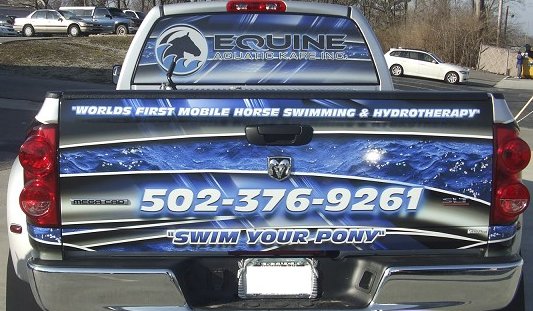
Vehicle Advertising: Take Your Business on the Road

Advertising takes on many forms for a small business. You may try postcards, leads groups, ads in magazines or newspapers or of course - online advertising like Facebook or Google Ads. But there is definately an avenue of advertising that is affordable and wildly effective. What are we talking about?

Vehicle Advertising!

Imagine the usual traffic jam - whether it's on the highway or in line to drop of kids at school. Everyone sits, in their cars, trucks and even campers waiting for the car in front of them to move. They are almost begging for something to look at that is more exciting than the license plate cover ahead of them that says "I'd rather be..." Now, you might know exactly what we mean because you have been in this situation. One might think this is not the moment to advertise your business - but you'd be wrong!

Here's 5 Reasons Why

1. Impressions Galore

The Federal Highway Administration reports that a vehicle sporting an advertisement generate up to 23,000 impressions per day in a metro city. Now, maybe you don't live in a metro city but just think about how many cars you pass on your way to work, the grocery store, the bank, soccer practice and even on vacation. All of those trips in your vehicle are advertising oportunities for people to be exposed to your business.

2. It's Never NOT on Duty

Vehicle advertising works for you around the clock, every single day and night, 365 days a year for as long as you have it on your car. Whether you are driving or parked in a parking lot - your vehicle advertisement is a non-stop marketing machine working for you!

3. Stats Speak for Themselves

98% of Vehicle Advertising creates a positve image for the advertiser
97% of customers remember seeing a specific vehicle advertisiment of a business they buy from
96% of drivers and pedestrians say they notice words and pictures displayed on vehicles

4. Reach a Wide Demographic

Most American's (96%) spend time in a vehicle as either the driver or passenger at least 2-3 times per week. Many of us drive or ride in a car every day! This isn't an age, wealth or interest specific type of advertising. You can reach a vast number of people - all who could potentially be your next customer.

5. Cost Effective for You

Many kinds of advertising charge you for the length of time an ad runs and the quantity of people it (might) reach. While you pay for a vehicle advertisment in the beginning, you don't pay again! Many vehicle decals last for 2-5 years which means this initial cost spread out over this long span of time rates as a cost effective method of advertising.

There are many different kinds of vehicle advertising options - from decals to window graphics and more! While some are permanent (perfect for commercial vehicles) - others are easily removable and work great for your own personal car, truck or RV. Take the lead that even the big businesses employ and take your business on the road with vehicle advertising!

Tuesday, May 15, 2012

Online vs Traditional Advertising Methods

As the saying goes, "Nothing changes if nothing changes." However, if everything out there is changing except you - you can be you're getting left behind. The growth of online information technology has changed the landscape of business marketing. The internet has replaced or vastly altered traditional advertising mediums such as magazines, newspaper, radio and television. All of these once "print only" mediums have online versions. With a good strategy and market awareness; businesses can utilize the internet to achieve effective and cost efficient marketing. Below are a few comparisons drawn between online and traditional advertising.

Online Advertising is Targeted

Instead of wasting time and effort (as well as lots of money) to send out mass mailings and junk mail with low return on investment, businesses can allocate their money smarter and more efficiently with online advertising by targeting specific audiences who are actually searching for your business, product or service.

Tracking and Conversion

Here’s the big question - How many people have been exposed to your ads? It’s very difficult to measure the effectiveness of direct mail, newspaper and TV advertisements. Online advertising however, empowers businesses with powerful tracking tools that can measure the smallest details such as impressions, conversions and Return on Investment.

Entry-level and Ongoing Fees

Yellow page ads or a magazine ad placement can be very costly. Internet advertising has yet again empowered the users to control their budget by allowing various bidding methods and low initial fees. Due to the targeted nature of online advertising and the ability to track the effectiveness of ads, making instant adjustments to campaigns is much cheaper than non internet advertising mediums.

Internet Gives Businesses Control

The biggest advantage of Internet advertising is that it is the most powerful communication tool available. It can reach households and other businesses via computers, mobile phones and tablets. Rather than allocating your efforts on finding different mediums for various regions and audiences; you can focus on what you do best and let your clients come and find you by setting up targeted campaigns.

Better Branding

Any form of advertising helps in improving the branding, but online advertising stands a notch higher in effectiveness. Internet advertising can expose a small business to potential customers all over the world. When used for the right products and in the right way, it has the potential to reach more customers for less money than any other form of advertising.
Online advertising is a powerful tool for businesses to have in their marketing strategy to effectively get the word out and achieve their marketing goals.

Friday, October 14, 2011

What Kind of QR Code do I Need?


A QR code (abbreviation for Quick Response code) is a specific matrix barcode (or two-dimensional code) that is readable by dedicated QR barcode readers and camera telephones. A QR Code can deliver information to potential customers FAST! There are several different types of ways you can use your QR Code for business so you will need to identify what kind of QR Code you will need?

QR Code delivers CONTACT INFORMATION - On branding items like Business Cards, Letterhead, Envelopes and Directory Listings, a QR Code that displays a vCard or Contact information will be most useful. When a potential customer scans this kind of QR Code they will see your name, phone number, location or mailing address, email address, web address and even a memo or tag line. This information is easy to register and save to their address file with absolutely no need to enter numbers or words which can be mistakenly mispelled or entered incorrectly.

QR Code delivers an SMS MESSAGE - Texting is a phenomenon! When you want people to share your company or product with their friends or co-workers, an SMS message might be your best kind of QR Code. When a potential customer scans this type of QR Code then it will open their texting application with an automatic message ready to send to anyone in their address book. For example, if you are offering a special or coupon, including an SMS QR Code on the coupon that is labeled "Share with Friends" will auto populate a message about how they would like to share your business coupon. The message can include your contact info or website as well.

QR Code takes a visitor to a WEBSITE - QR Codes are limited to a certain amount of characters which may mean that you want to send people to your website which allows them to learn alot more about your business. When a potential customer scans a URL QR Code, they are transported directly to your website right on their phone. They can shop, subscribe or map your business right there! You can also embed a video and link the QR Code to that page where the video is located so the visitor can watch it from their smart phone.

QR Code displays a CALENDAR EVENT - If you are running a special on a particular day or have an open house scheduled, you might want to use a Calendar QR Code to make it easy for a potential customer to remember your event. When a customer scans your Event QR Code they will see the event title, location, date, time and description in a format that they can save right to their calendar. Put your event on their schedule with just a touch of a button - or screen!

Whatever QR Code you use - make sure your business name is clear! In the very least, your customers should be able to find your website and phone number without much trouble. As you get more familiar with how to use the different kinds of QR Codes to best suit your marketing needs.


Read More About QR Codes:
What is a QR Code?
How does a QR Code work?
What kind of QR Code do I need?
How do I use my QR Code?

Qlixite will customize your QR Code for Free - Get Yours NOW!

How Does a QR Code Work?


A QR code (abbreviation for Quick Response code) is a specific matrix barcode (or two-dimensional code) that is readable by dedicated QR barcode readers and camera telephones.

Market - A business or organization incorporates various kinds of QR Codes into their marketing and advertising. They link their website to their advertising, their contact information to their business cards and offer specials through the codes on exclusive emails or mailings.

Scan - A potential customer receives a business card from the business owner or sees an ad in a local publication. They use their smart phone to scan the QR Code which directly opens the business' website or displays all of the contact information into the customers phone. Now it is quick and easy for the customer to research and connect with the business.

Connect - Even if the customer doesn't connect with the business right after scanning the QR Code - their phone retains the information until they physically delete it. SO if the potential customer wants to get in touch with the business - they may not remember the website name or have the advertisement for reference but they have all of the information right in their phone - ready to make the call or map for directions.


Read More About QR Codes:
What is a QR Code?
How does a QR Code work?
What kind of QR Code do I need?
How do I use my QR Code?

Qlixite will customize your QR Code for Free - Get Yours NOW!

What is a QR Code?


A QR code (abbreviation for Quick Response code) is a specific matrix barcode (or two-dimensional code) that is readable by dedicated QR barcode readers and camera telephones. The code consists of black modules arranged in a square pattern on a white background. The information encoded may be text, URL, or other data.

This QR Code Leads to a webpage
so a visitor can watch a Video
Common in Japan, where it was created by Toyota subsidiary Denso-Wave in 1994, the QR code is one of the most popular types of two-dimensional barcodes. The QR code was created to allow its contents to be decoded at high speed.

Although initially used for tracking parts in vehicle manufacturing, QR codes now are used in a much broader context, including both commercial tracking applications and convenience-oriented applications aimed at mobile phone users (termed mobile tagging). QR codes may be used to display text to the user, to add contact information to the user's device, to open a website, link to a video on a server like YouTube, or to compose an e-mail or text message. Users can generate and print their own QR codes for others to scan and use by visiting one of several free QR code generating sites.

QR codes storing addresses and Uniform Resource Locators (URLs) may appear in magazines, on signs, buses, business cards, or almost any object about which users might need information. Users with a camera phone equipped with the correct reader application can scan the image of the QR code to display text, contact information, connect to a wireless network, or open a web page in the telephone's browser. This act of linking from physical world objects is termed hardlinking or object hyperlinking.
Google's mobile Android operating system supports QR codes by natively including the barcode scanner (ZXing) on some models, and the browser supports URI redirection, which allows QR codes to send metadata to existing applications on the device. Nokia's Symbian operating system is provided with a barcode scanner, which is able to read QR codes, while mbarcode is a QR code reader for the Maemo operating system. In the Apple iOS, a QR code reader is not natively included, but more than fifty free apps are available with reader and metadata browser URI redirection ability. With BlackBerry devices, the App World application can natively scan QR codes and load any recognized Web URLs on the device's Web browse this for compliance.

The use of QR codes is free of any license. The QR code is clearly defined and published as an ISO standard. Denso Wave owns the patent rights on QR codes, but has chosen not to exercise them. The term QR code itself is a registered trademark of Denso Wave Incorporated.

Standard QR code is the QR code standard for applications that possess the ability to handle large scans. A standard QR code can contain up to 7089 characters, though not all QR readers can accept that much data.

Read More About QR Codes:
What is a QR Code?
How does a QR Code work?
What kind of QR Code do I need?
How do I use my QR Code?

Qlixite will customize your QR Code for Free - Get Yours NOW!

Thursday, September 1, 2011

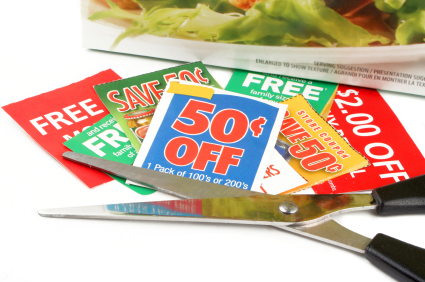
What Makes a Good Coupon? (And What Makes A Bad One)

Some people spend their whole marketing careers creating the definitive "Good Coupon" (ie: a coupon that brings the customer to you and yet doesn't cost too much in profit) and avoiding a bad coupon (usually a coupon that gets no response). Small business owners can see a dramatic improvement in their profits by offering coupon. To make a good coupon, you need to think like your customers. What would make you clip that coupon and go use it? What kind of coupon calls you to check out that business if you've never used them before? What coupons do you pass on?

Pick A Product/Service to Discount that your Customer is Actually Interested In
A coupon advertises a discount for a limited period of time on a product or service. You may have an low cost/high profit item that you WANT people to purchase however if that's not the item that is currently bringing customers in the door, your coupon (unless a deep discount) is not going to be as effective.


Don't Limit Who Can Use the Coupon
People dislike fine print. There's nothing I despise more than when I take a coupon and try to use it only to learn that my coupon does not apply to me because I am an existing customer. Why would you not want to reward your current customers for shopping with you? If you are discounting a service that only a very limited number of people can use, make sure you are offering a variety of coupons at the same time that together will include everyone.

Create Urgency with An Expiration Date
Expiration dates create an sense of urgency that your customer will need to act quickly to use and benefit from the coupon. Experiment with expiration dates. A date that is too close can be disastrous if your marketing strategy doesn't get the coupon out in time. Plus it doesn't give people enough time to redeem it. A date too far away will be forgotten. Depending on your advertising, what your discount is and the nature of your business, 2 weeks to 1 month can be a good time frame for a coupon expiration date.


Offer a Discount not just a Coupon
Statistics show that people don't respond if a coupon's face value is too small. I recently saw a coupon for a medical office that offered $1.00 off an office visit. Their visit costs, on average, $35.00 so their coupon gave me less than 3% off. That doesn't make me want to respond to that coupon at all. In fact I was almost turned off to the business itself for offering such a sad coupon. This is where you need to put your customer hat back on. If you see 10% off, 15% off or 25% off coupons - which do you respond to? You may cringe at the idea of offering a 25% off coupon but think about successful chains like Macy's which focus millions of dollars on this marketing strategy that people come shop with them more if they believe they'll save with their coupon.


Create a Coupon Strategy and Go For It!
If you want to do a semi annual or annual deep discount coupon then plan it out and market accordingly. If you want people to consistently check your website or store for coupons then offer a variety and consistently market them. Whatever you decide to do - plan it out and execute it. That doesn't mean you can't modify your plan as you find coupons that work or fail. It means you are taking an active role in this side of your marketing strategy.

Thursday, August 18, 2011

Mobile Marketing Website: 5 Easy Steps to Get Started

Are you thinking about mobile marketing? Wondering how you can use mobile marketing to connect with customers?
The good news is that mobile marketing is not too complex.
Here are five things you can do to get started in mobile marketing. Once you’ve mastered the steps below, you’ll see that mobile marketing is a great way to open up new revenue streams for your business.
Ready to get started?


#1: Set up your mobile website
This is actually easier than you might think. One option is to use the automated systems offered by many companies. Essentially, they take your existing website content and auto-format it for a mobile screen.
WordPress has some plugins that do a pretty good job of this and ThisIsMyDomainUSA has an automated system that does it, too when you buy a .mobi domain. But for the best user experience, I recommend you focus on one of the options outlined below.

Your mobile home page should have a clean and simple design. On the left is the standard 60 Second Marketer home page seen on a smart phone. On the right is the mobile version of the site.


Option number two is to use one of the many plug-and-play platforms offered online. These companies actually create a separate mobile website that is completely independent from your regular website.
Just Google “How to set up a mobile website” and you’ll find a number of companies doing this. There are some good organizations offering these plug-and-play systems, but there are also some real losers, so do your research before you choose a company to work with. Mobicanvas.com, GetGoMobi.com and Onswipe.com all seem to have good solid platforms to work from.

You can build and manage your website quickly and easily!
A third option is to add a simple line of code onto your existing home page that “sniffs out” the screen size of the person visiting your site.
If the person visiting your site has a screen that’s more than 600 pixels wide, they’re probably coming from a PC and are directed to your regular site. If the screen is smaller than 600 pixels, they’re probably coming from a mobile device and will be redirected to pages designed for a smartphone screen.
Out of these three options, the third option is the best approach. Just ask your web designer to do a search for “mobile website redirect code” and they’ll find plenty of options like this one on CSS-Tricks.com.

Redirects are a critical step in ensuring your website is search-engine friendly.

#2: Claim your business on location-based platforms
You should claim your business on location-based platforms like Foursquare,Gowalla and Facebook Places, especially if you have a brick-and-mortar location.
Claiming your business just means that you’re raising your hand to these services and saying, “I’m an official representative of XYZ business and want to be listed on your platform.” Claiming your business is similar to calling up the phone company to get a free listing in the Yellow Pages, only now you’re reaching out to these location-based services instead of Ma Bell.
Once you’ve claimed your business, you can start using these platforms to run mobile promotions. For example, Chili’s ran a promotion where everyone who “checked in” to their locations using Foursquare got free cheese dip.
Better still, Chili’s improved on the promotion by making it so that anybody who checked in at another store within 200 yards of Chili’s got the same offer. Yup, you heard right—if you checked in at the florist next door, you got a digital coupon for free cheese dip at the Chili’s a few steps away. Brilliant!
Users can unlock the free appetizer coupon at participating restaurants by checking in at Chili's through Foursquare.

#3: Immerse yourself
You can’t fully understand mobile marketing until you use mobile marketing. So when you get through reading this article, grab your smartphone and mess around with it—check in on Foursquare, buy some shoes using the Zappos app, do a voice search using Google Voice Search—just get comfortable with all your smartphone’s nooks and crannies.

The Google Voice Search App lets you speak your queries without pushing any buttons, and also lets you do local searches without specifying your location. Faster web search with fewer keystrokes.
When you’re ready to take a deeper dive into your smartphone, download theStarbucks mobile payment app and use it to pay for your next cup of coffee. That way, you can look even cooler than the guy who ordered the “double whipped mocha Frappuccino with a twist of whatever to go.”

You can pay for your Starbucks drink using the Starbucks Card Mobile app!
The more you use mobile media, the more you’ll see that it’s really not all that complex. It’s just the newest marketing channel in a long line of marketing channels introduced throughout the last several decades.
Tip: For smartphone overachievers: 1) Download LinkedIn to your smartphone, 2) enable your Bluetooth function and 3) open up the LinkedIn application. In the LinkedIn app, you’ll notice an icon with two people shaking hands called “In Person.”
Find someone in your office who has LinkedIn installed on their smartphone, then “bump” your phones together. Ding! You’ve just used Bluetooth to exchange your LinkedIn profile without having to type a word. LinkedIn's app allows you to bump smartphones to exchange information.

#4: Run a mobile ad campaign.
A mobile ad campaign is great for all kinds of companies, but particularly good for companies that have brick-and-mortar locations. After all, if you own a restaurant, wouldn’t you want to have an ad pop up when someone searches for “restaurants near my house”?
Mobile ad campaigns can be bought on a cost-per-click basis, a cost-per-thousand basis or a cost-per-acquisition basis.
Sound confusing? Don’t worry—just visit any of the most popular mobile advertising platforms (like Millennial Media, iAd from Apple or AdMob from Google) and they’ll walk you through the distinctions and how to use the services.
AdMob provides innovative solutions for brand and performance advertisers, effective distribution for app developers and revenue opportunities for mobile site owners.

Qlixite's QR Code
#5: Scan a QR Code.
QR Codes are those little barcode-like squares that are popping up all over the place. For an in-depth introduction to QR Codes, you can check out How QR Codes Can Grow Your Business.
QR Codes (or their closely related cousins EZ Codes, Microsoft Tags, SPARQCodes, etc.) can be scanned by smartphones. Once scanned, they drive you through to mobile web pages that offer discount coupons, bonus content, special offers or some other additional content.
How to download a QR Code reader to your smartphone:
 Turn on your smartphone and open your web browser.
 Visit BeeTagg.com or Sparq.it and click the link that says “Download QR Code Reader”.
 Launch the app and hold your phone’s camera up to a QR Code. The app will automatically scan the code.

Bottom Line
By now, you’re probably realizing that mobile media really isn’t that complex. It’s just like social media or email marketing or organic search, the only difference is that the delivery mechanism is a smartphone or a tablet computer instead of a PC.
These are just five of the ways you can kickstart your use of mobile marketing. There are probably dozens more.
What are your thoughts? What mobile marketing tools have you tried out that you’d like to share with our readers? Leave your comments in the box below.